I Watched China Destroy American Manufacturing. The Fight to Rebuild Has Just Begun.
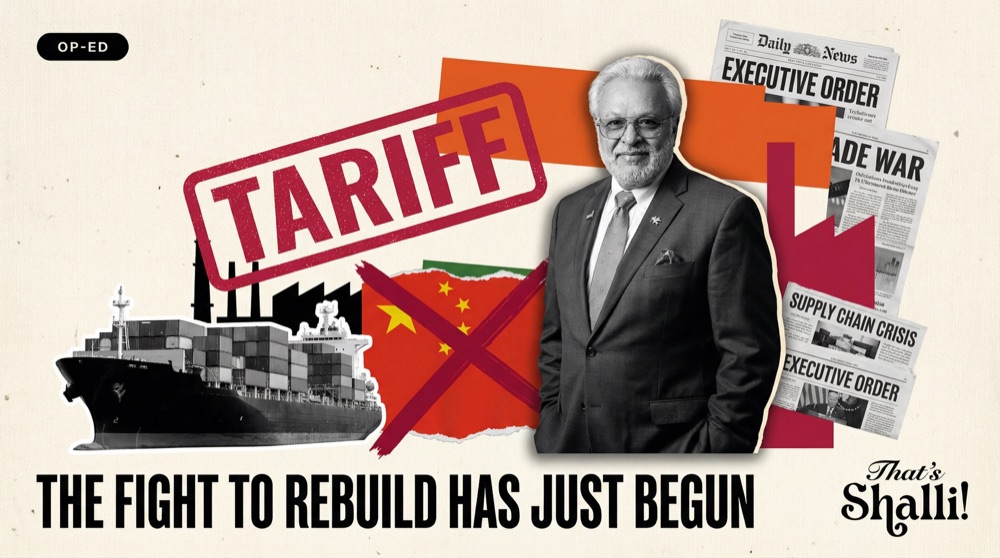
It was strategy, not trade
I did not learn about the destruction of American manufacturing from a think tank. I watched it happen from a factory floor.
I came to this country with almost nothing and built electronics companies that made real, physical products, assembled by American hands. Over four decades I watched a system designed in Beijing hollow that world out, plant by plant and town by town.
This was not the invisible hand of free trade. It was strategy. China subsidized its industries, held down its currency, forced technology transfer, stole intellectual property, and dumped goods below cost until the American competition closed its doors. We called it globalization. They called it a plan. Both were true.
The damage is not abstract. It shows up in the boarded storefronts of manufacturing towns, in the supply chains that snapped during the pandemic, and in a nation that discovered it could no longer make its own medicine, its own chips, or its own protective equipment when it needed them most.
The tools still work
Some argue the fight is over, that after a Supreme Court setback on tariffs the tools are gone. That is wrong. Section 301 and Section 232 remain on the books, and they remain vital. Used seriously, they let us answer unfair trade and protect the industries a nation cannot afford to lose.
We called it globalization. They called it a plan. Both were true.
But tariffs alone are not a strategy. Three things have to happen together. Close the loopholes, the transshipment through third countries and the exemptions that let Chinese goods slip in under another flag. Focus on finished goods and not only raw inputs, so we rebuild the whole chain and not just its first link. And pair enforcement with investment, so that when we make it harder to import, we make it easier to build here.
The partner in the fight
There is a partner in this fight, and it is India. Make in America, Make in India is not a slogan. It is the architecture of a supply chain among trusted democracies that does not run through Beijing. Every factory that opens in Ohio or Gujarat instead of Shenzhen is a link in a chain that cannot be weaponized against us.
I am an optimist about this, because I have built things and I know they can be built again. The comeback will not come from nostalgia. It will come from policy with teeth, investment with patience, and the confidence that a country that once made everything can make what matters again. The fight to rebuild has just begun, and I intend to be on the floor for it.