The Nation That Sets the Rules for AI Will Set the Rules for the Century
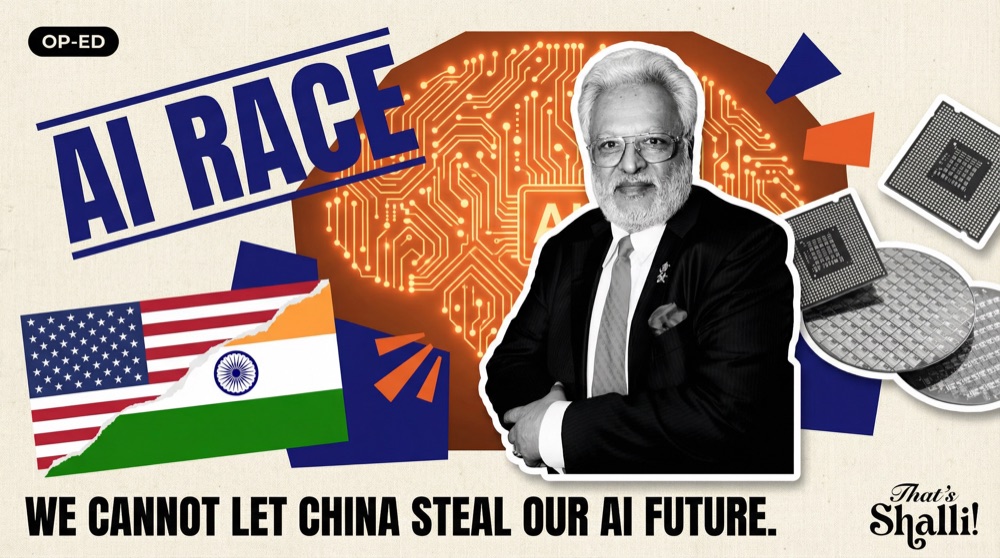
Standards are power
The twentieth century was decided by who could build the most steel, split the atom, and reach the moon. The twenty-first will be decided by who writes the rules for artificial intelligence. That contest is already underway, and America is not guaranteed to win it.
I have spent forty years building companies that turned engineering into products, and I have watched general-purpose technologies rearrange the balance of power between nations. Electricity did it. The microchip did it. The internet did it. AI is the next one, and it is moving faster than anything that came before.
The instinct in Washington is to treat this as a race to the biggest model. That misreads the contest. The nation that leads will not simply be the one with the most compute. It will be the one whose standards, safeguards, and values become the default that everyone else builds on. Whoever writes those rules exports their worldview with every line of code.
The democratic answer is a partnership
Beijing understands this. It is not only racing to build capable systems; it is racing to write the governance, the export terms, and the surveillance architecture that travel with them. If the democracies cede that ground, we will spend the century living inside rules written by an authoritarian state.
The answer is not to slow down out of fear. It is to lead, and to lead together. The United States and India are the two nations positioned to set the democratic standard for AI. America has the capital, the frontier labs, and the research base. India has the talent, the scale, and a rising generation of builders who already power much of the world's software. Apart, each is strong. Together, they are decisive.
Standards are power. Whoever writes them exports their worldview with every line of code.
What that partnership requires is concrete. Shared research on safety and alignment, so the systems we deploy are ones we can trust. Open talent corridors, so the best engineers build here rather than for our rivals. And common rules on data, transparency, and misuse that other democracies can adopt without rewriting from scratch.
What losing looks like
We should be honest about the stakes. A world where the dominant AI systems are trained on authoritarian assumptions is a world where the tools that shape speech, credit, hiring, and even warfare answer to no free public. That is not a distant risk. It is the default outcome if we treat this as someone else's problem.
The rules for the century are being drafted right now, in labs and legislatures, by people who will not wait for us. America and India can write them together, or watch them be written by those who mean us harm. I know which future I intend to help build. The only question is whether we move while the window is still open.